
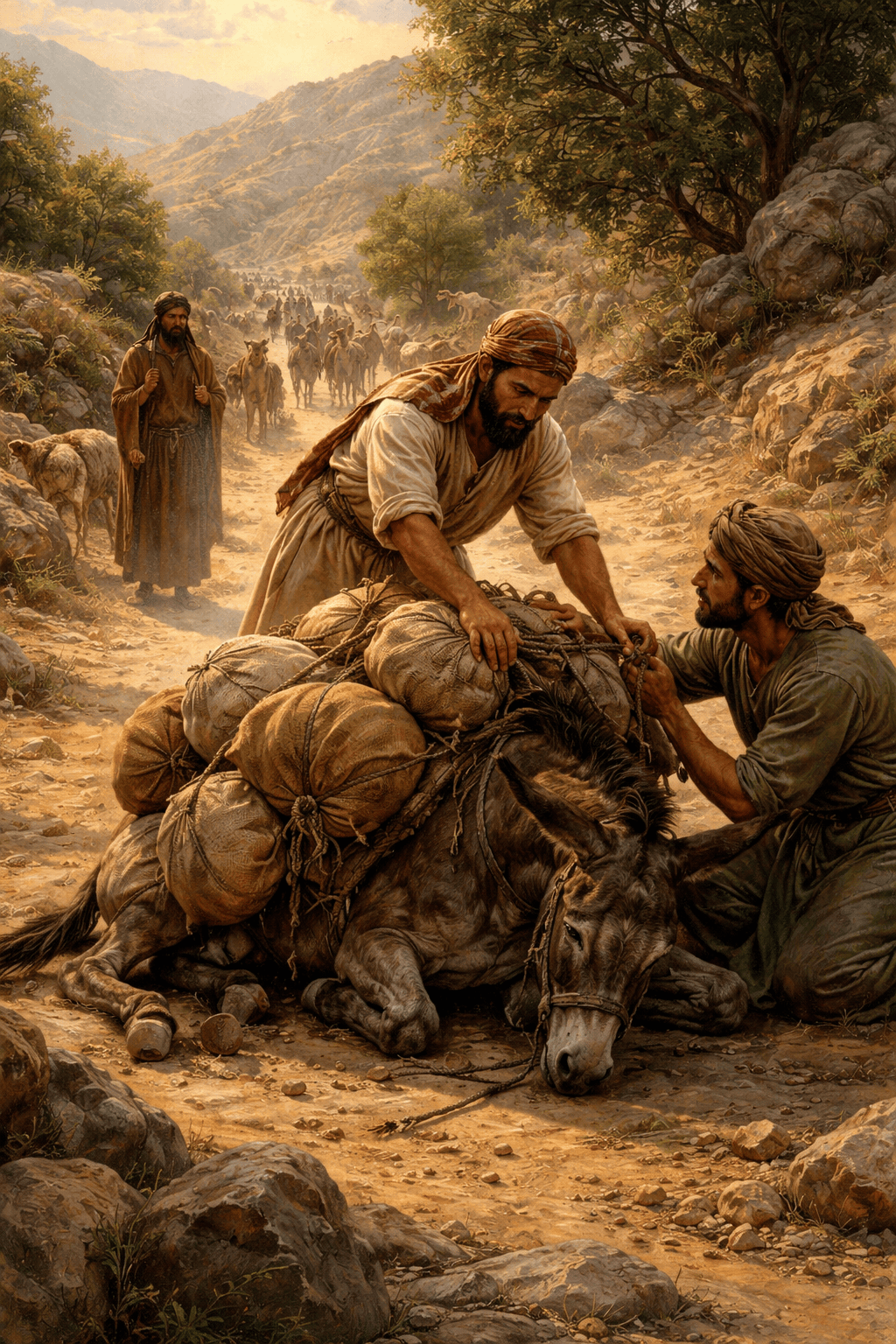
📖 ✝️ Scripture Reading:Exodus 23:4–9
“If you see the donkey of one who hates you lying under its burden, and you would refrain from helping it, you shall surely help him with it.”
Exodus 23:5 NKJV
“True justice is not proven by how we treat friends, but by how we restrain ourselves when power favors us.”
— Abraham Kuyper
💒 🕊️ ✨ Context ( Story ) :
Israel stands at Sinai as a rescued people. The chains of Egypt are broken, but God knows something deeper must be shaped—the heart of a free society. The Covenant Code (Exod. 20:22–23:9) does not begin with worship rituals or priestly duties. Instead, it enters the rough terrain of daily relationships, public power, and private grudges.
These laws do not explain how to get saved; they reveal how saved people live. God addresses enemies, animals, courts, bribes, the poor, and the foreigner. Holiness here looks practical. Justice here looks compassionate. Faith here shows up where conflict, power, and memory collide.
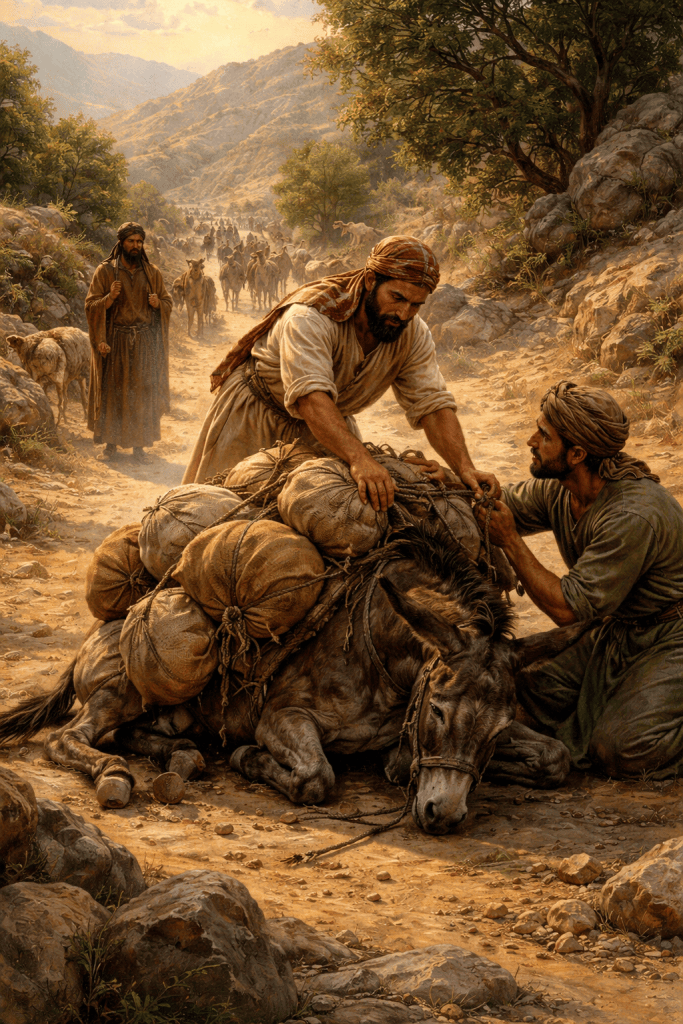
When an enemy’s animal wanders away (v.4), God commands intervention. Hostility is interrupted by obedience. Mercy is not postponed until reconciliation—it is practiced in the middle of tension.
When hatred tempts us to walk past suffering (v.5), God forbids indifference. The animal’s burden becomes a moral summons. Compassion is no longer optional.
In the courtroom (v.6–8), God exposes injustice that hides behind legality. The poor are easily crushed, truth is easily twisted, and even the wise can be blinded by gain. God declares that verdicts shaped by bribes and falsehood may look lawful—but they are never righteous.
Finally, God appeals to memory (v.9). Israel is commanded to protect the stranger because they remember what it felt like to be powerless. Redemption remembered becomes mercy practiced.
🤔 🪞 💡 Reflection Thought :
God’s justice is not mechanical; it is deeply moral and relational. These laws dismantle the idea that righteousness is proven only in worship spaces. They insist that obedience must reach our resentments, our conveniences, and our silence. The measure of faith is not how strongly we feel, but how faithfully we act—especially when compassion costs us something and justice brings discomfort.
🎬🔛 Historical True Story :
“The Man Who Refused to Look Away”
John Howard and the Reform of Prison Justice (England, 1773–1790)
In 1773, John Howard, a wealthy English landowner and devout Christian, was appointed High Sheriff of Bedfordshire. The position required little more than ceremonial duties. He could have remained comfortable, respected, and distant from suffering.
Instead, Howard chose to see what others ignored.
When he visited Bedford Gaol, he was appalled. Prisoners—many not yet convicted—were locked in filthy, overcrowded cells. Disease spread rapidly. Jailers demanded illegal fees for food, bedding, and release. Those who could not pay remained imprisoned long after their sentences expired. Innocent men suffered, not because of crime, but because of poverty.
Howard realized something disturbing: the injustice was legal.
Rather than turning away, he spent years traveling across England and Europe at his own expense, inspecting hundreds of prisons. He recorded conditions meticulously, exposed corruption publicly, and challenged authorities relentlessly. Prison keepers threatened him. Officials mocked him. He contracted deadly illnesses multiple times.
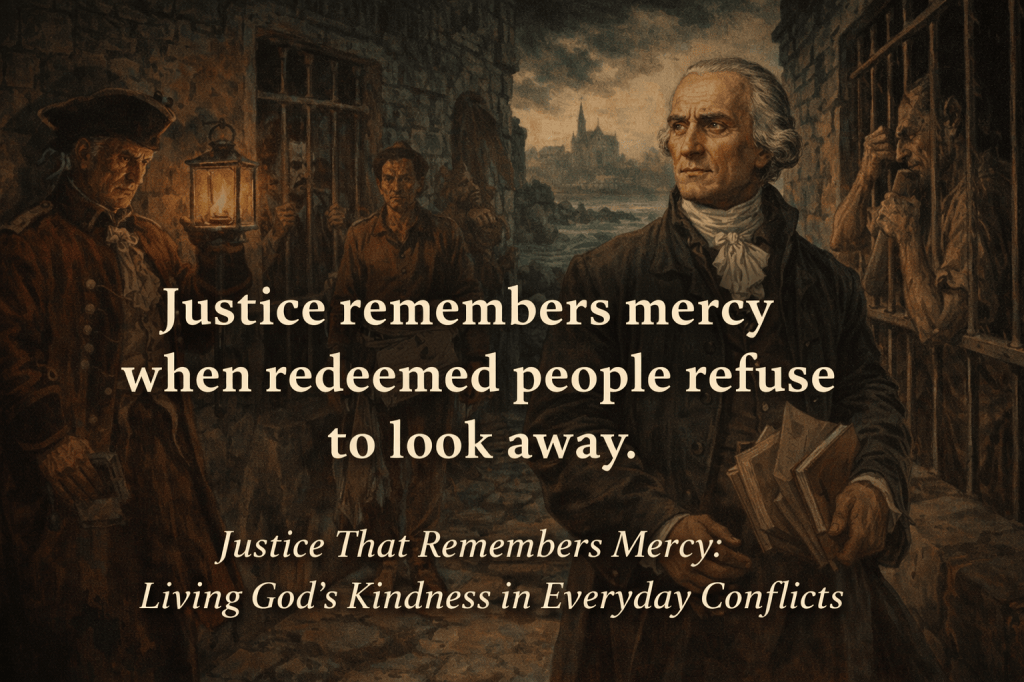
Yet Howard refused bribes, honors, or comfort. His Christian faith convinced him that justice without mercy was no justice at all. In 1777, his efforts led to the Gaols Act, ending illegal fees and improving prison conditions. Though he died in 1790 while serving plague victims in Russia, his work permanently transformed how justice systems viewed prisoners—not as forgotten burdens, but as human beings worthy of dignity.
Justice changed because one man refused to walk past suffering.
Source:
https://en.wikipedia.org/wiki/John_Howard_(prison_reformer)
⚒️🎯 Personal Application :
As people who have been redeemed by grace, we are called to live differently in everyday conflicts. We are invited to interrupt hostility with kindness, resist benefiting from unjust systems, and refuse to look away when others are crushed by power or neglect. When we remember our own stories of deliverance, we find courage to act justly, speak truthfully, and practice mercy—even when it is inconvenient, unseen, or uncelebrated.
🙏 🕯️Prayer:
Lord, keep us from walking past suffering when obedience calls us to act.Help us practice kindness where resentment feels natural, truth where compromise feels easy,and justice where silence feels safer.May our lives reflect the mercy You have shown us.Amen.


Leave a comment