
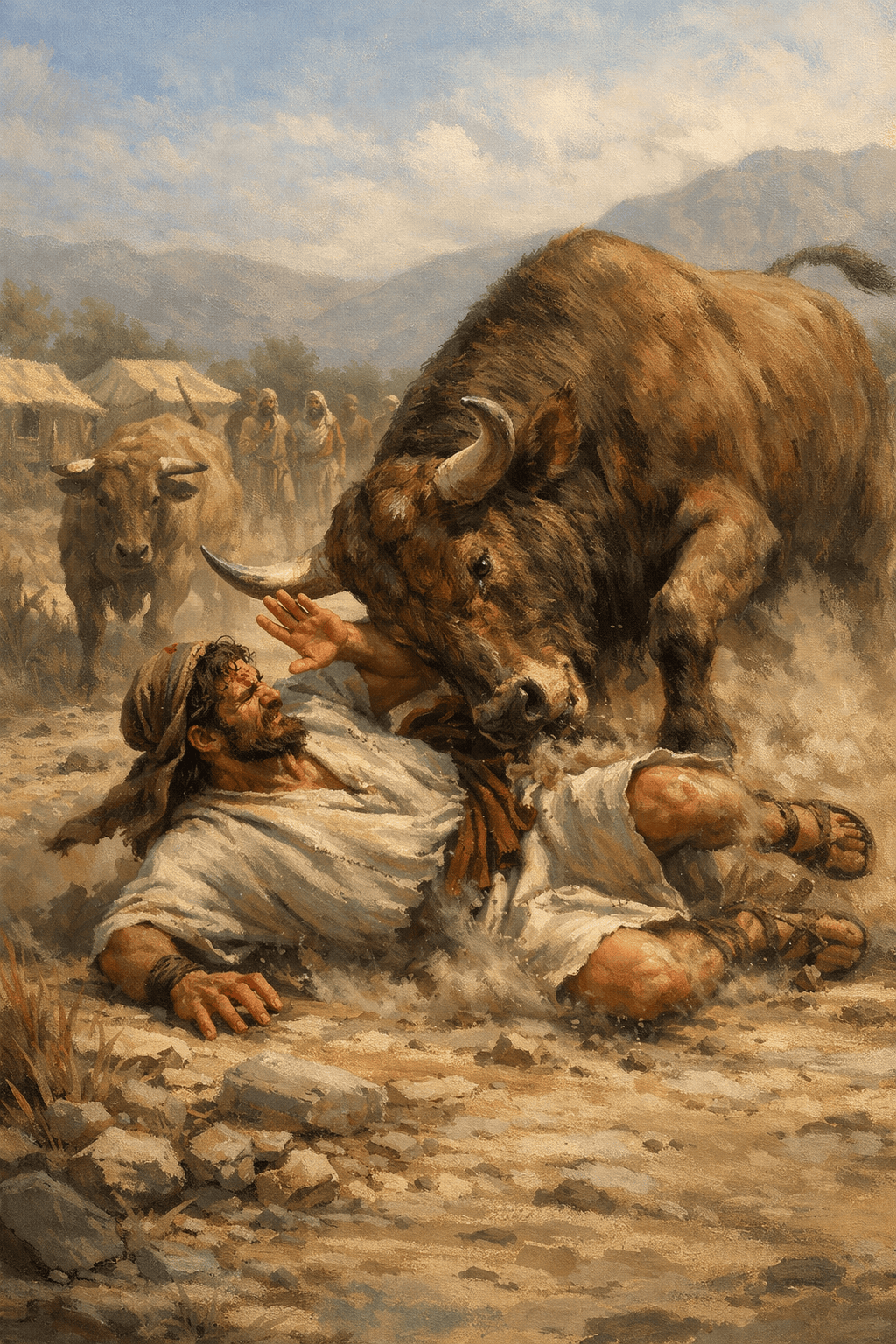
📖 ✝️ Scripture Reading:Exodus 21:28–32
“But if the ox were wont to push with his horn in time past, and it hath been testified to his owner, and he hath not kept him in, but that he hath killed a man or a woman; the ox shall be stoned, and his owner also shall be put to death.”
Exodus 21:29 KJV
“Justice consists not in retaliation, but in responsibility.”
— Abraham Kuyper
💒 🕊️ ✨ Context ( Story ) :
In ancient Israel, daily life involved animals, fields, labor, and risk. An ox—strong, useful, but dangerous—could become an agent of death.God’s law steps into this ordinary reality and asks a precise question:
Was this death unavoidable—or was it preventable?
The law does not rush to punish. It pauses to examine knowledge, warning, and neglect.
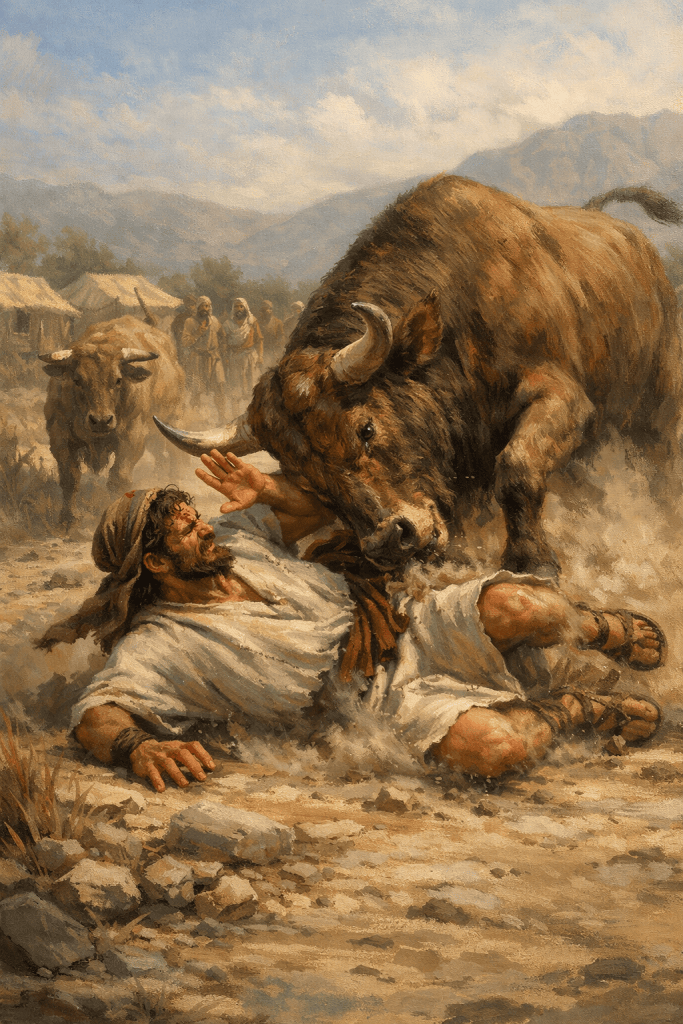
If the ox was never known to be dangerous, the owner walks free.But if the danger was known and ignored, guilt rests not on the animal—but on the human who failed to restrain it.
Justice, here, is not emotional.
It is discerning, moral, and accountable.
Key Word: “Wont to push”
• Hebrew: מֻעָד (mu‘ad)
• Transliteration: moo-awd
• Root Meaning: Appointed, warned, established as dangerous
A mu‘ad ox reveals that guilt begins where known danger is tolerated rather than restrained.
🤔 🪞 💡 Reflection Thought :
Exodus 21:28–32 teaches that God does not define guilt merely by outcome, but by responsibility. A death may be accidental, yet accountability emerges when warning signs are ignored. God’s justice is neither harsh nor passive—it weighs knowledge, intent, and negligence. This law protects life by demanding foresight and moral care. It reminds us that love for neighbor includes preventing harm when it is within our power to do so.
🎬🔛 Historical True Story :
“The Law That Saved the Children”
William Wilberforce and Factory Reform (England, 1802)
At the turn of the 19th century, England’s textile mills employed thousands of children. Factory owners knew the dangers—exhaustion, unsafe machines, disease—but accepted injury and death as “the cost of progress.” Children were crushed by gears, poisoned by air, and worked to collapse.
William Wilberforce, a devout Christian and parliamentarian, refused to accept preventable harm as inevitable. Guided by biblical justice, he argued that known danger created moral guilt. In 1802, he championed the Health and Morals of Apprentices Act, the first law to hold factory owners responsible for conditions they knowingly allowed.
Before:
– Child deaths normalized
– Danger ignored
– Profit excused negligence
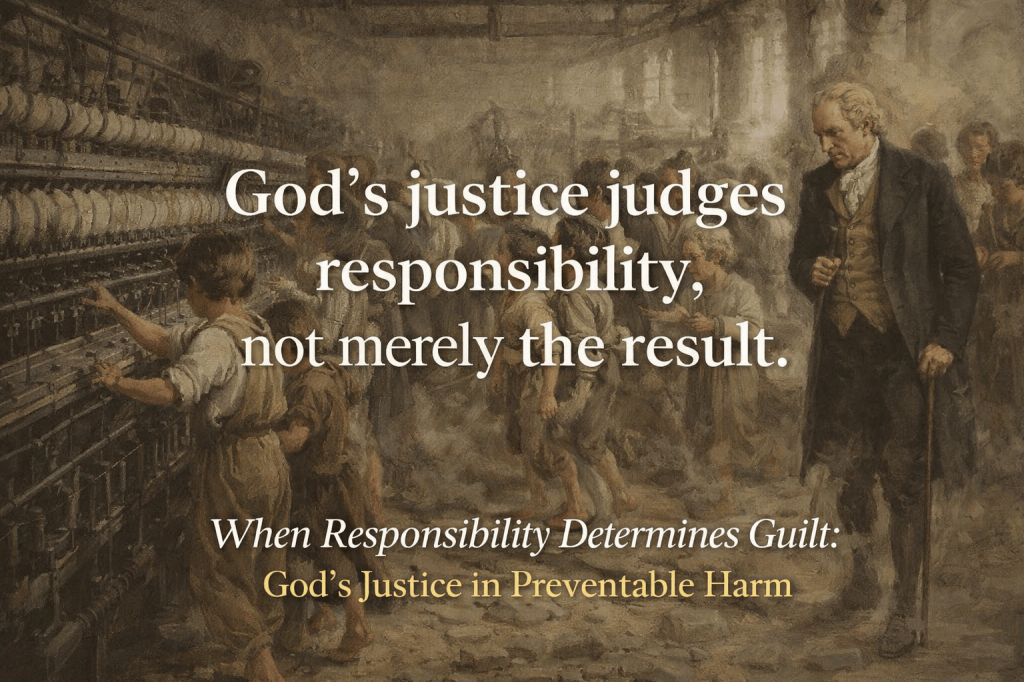
After:
– Legal accountability established
– Safety enforced
– Human life valued over convenience
Wilberforce did not remove industry—he restrained its harm.
Justice did not end work—it demanded responsibility.
🔗 Source:
https://www.britannica.com/biography/William-Wilberforce
⚒️🎯 Personal Application : We are accountable not only for what we do, but for what we fail to prevent when God has made us aware. When we ignore warning signs, delay action, or excuse negligence, we participate in harm—even without violent intent. God calls us to a justice that takes responsibility seriously, restrains danger early, and values every life equally. Faithfulness means acting before tragedy, not apologizing after it.
🙏 🕯️Prayer:
Lord, give us eyes to see danger before it destroys life.Teach us to act responsibly, not react defensively. Where You have warned us, give us courage to obey.Make us guardians of life through faithful restraint. Amen.


Leave a comment