
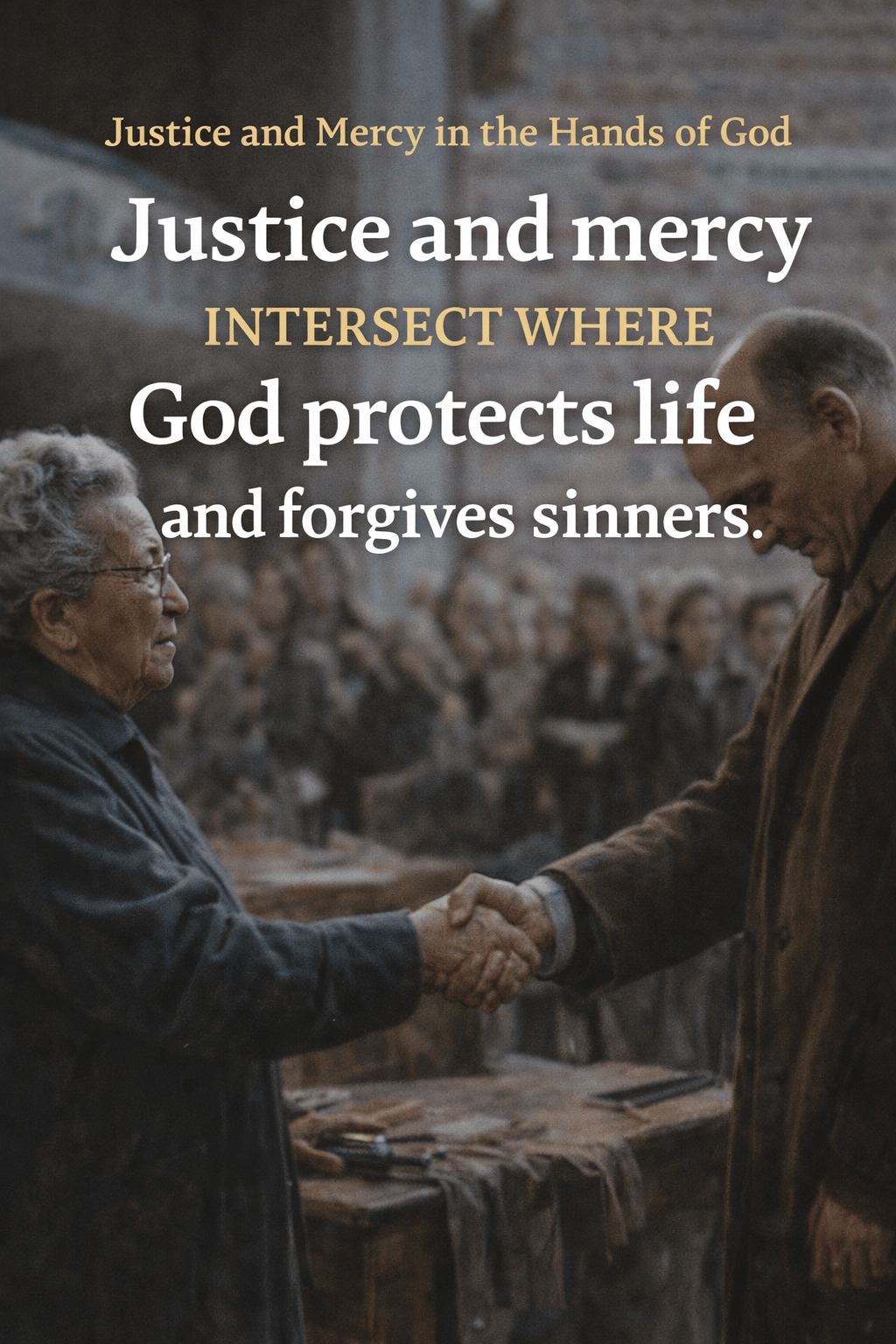
The year was 1947. Europe was still bruised and broken. Church walls stood, but hearts carried ruins deeper than stone. In a small church in Munich, Germany, a woman stood before a gathered crowd, speaking quietly yet firmly about forgiveness. Her name was Corrie ten Boom.
Few in that room knew her past.
Just a few years earlier, Corrie had lived in Haarlem, Holland, in a modest house above her family’s watch shop. When the Nazi occupation spread fear across Europe, Corrie and her family chose obedience to God over safety. They opened their home to Jewish families fleeing arrest. Behind a false wall in Corrie’s bedroom — later known as “the Hiding Place” — men, women, and children found refuge. Over time, hundreds of lives were saved within those cramped, silent hours.
But betrayal came.
In 1944, the ten Boom family was arrested by the Gestapo. Corrie, her sister Betsie, and their elderly father were taken away. Their father died shortly after imprisonment. Corrie and Betsie were sent to Ravensbrück concentration camp, a place of relentless cruelty designed to strip people of dignity, hope, and faith.
There, Corrie watched her sister suffer — beaten, mocked, starved. Yet in that darkness, Betsie whispered words that seemed impossible: “There is no pit so deep that God’s love is not deeper still.” In December 1944, Betsie died in the camp. Corrie survived, released by a clerical error — a mistake that spared her life.
After the war, Corrie did not retreat into silence. She traveled across Europe, telling her story — not to condemn, but to proclaim that forgiveness was the only power strong enough to heal a shattered world.
That conviction was tested in Munich.
As Corrie finished her message, she noticed a man moving toward her. Her breath caught. She recognized him instantly — one of the former SS guards from Ravensbrück. His face was older now, his uniform replaced with a coat and tie, but memory surged like a flood. She remembered the barracks. The humiliation. The cruelty. The moment her sister’s life faded away.
The man stopped in front of her.
He spoke of becoming a Christian. He spoke of God’s forgiveness. Then, quietly, he said he wanted to hear forgiveness from her. He extended his hand.
Corrie’s mind screamed no. Her heart froze. Forgiveness felt impossible. Her sister was dead. The wounds were real. Justice had not erased the pain.
Yet Corrie prayed — not eloquently, not confidently — but desperately.
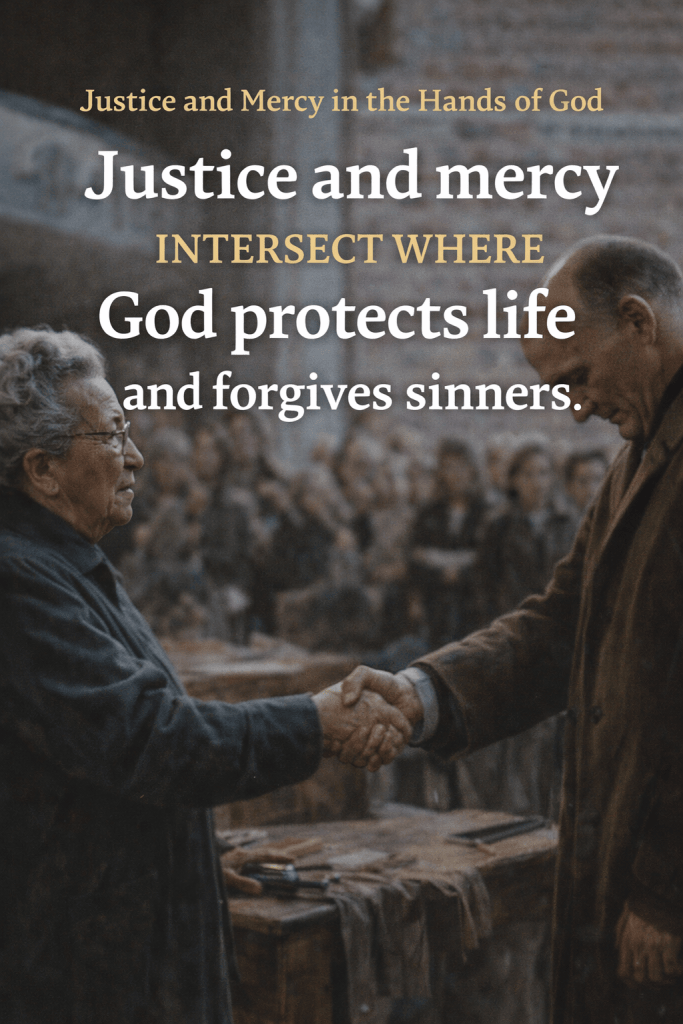
And then, by an act of will sustained by grace, she lifted her hand and placed it in his.
Later she would write that it was as if a current passed from her shoulder, through her arm, into their joined hands. Warmth flooded her being. Hatred loosened its grip. In that moment, forgiveness became more than a command — it became a miracle.
She did not excuse his past. She did not deny justice. She entrusted both to God.
In that simple handshake, Ravensbrück lost its power.
The camp that had taken her sister could not take her soul. Mercy overcame memory. Grace triumphed over hatred. And the gospel proved itself not merely true — but alive.
“To forgive is to set a prisoner free and discover that the prisoner was you.” — Corrie ten Boom
📌 Source link (for more):
https://christianhistoryinstitute.org/magazine/article/ch-150-living-for-christ


Leave a comment