
📖 ✝️ Scripture Reading: Exodus 21:1–4
“If you buy a Hebrew servant, he shall serve six years; and in the seventh he shall go out free and pay nothing.”
Exodus 21:2 NKJV
“Mercy rooted in redemption guards dignity and restores freedom.”
— John Stott
🎬🔛 William Wilberforce and the Abolition of the British Slave Trade (1807)
In the late 18th century, the British Empire’s economy was deeply entwined with the Atlantic slave trade. Millions were forcibly uprooted, transported under inhumane conditions, and sold as perpetual human property. At that time, many Europeans saw bondage as an economic necessity and a social inevitability.
But one Christian statesman, William Wilberforce, driven by prayer, Scripture, and conviction, refused to accept this injustice. He saw slavery not merely as a political issue but as a moral and spiritual blight.
To be continued…
💒 🕊️ ✨ The people of Israel had just stood in awe of God’s voice at Sinai. The Ten Commandments had laid out what it means to live rightly before God — in holiness, love, and justice. But holiness is not just about God’s purity — it is about how His people live with one another.
So God gives Moses the first of many case laws: how to treat a Hebrew servant. In the ancient world, servitude often meant life-long bondage without hope, a shrinking of personhood to property. Yet God’s law works differently. If a fellow Israelite becomes needy and enters servitude, this is not a permanent sentence. Instead, the law sets limits: six years of service, then freedom without cost in the seventh year. If that servant entered with family, they leave together. If the master gave a servant a wife and children were born in the master’s household, the law lengthens responsibility but still preserves the servant’s freedom — a tension the law later resolves with generous release (Exodus 21:5–6; Deuteronomy 15).
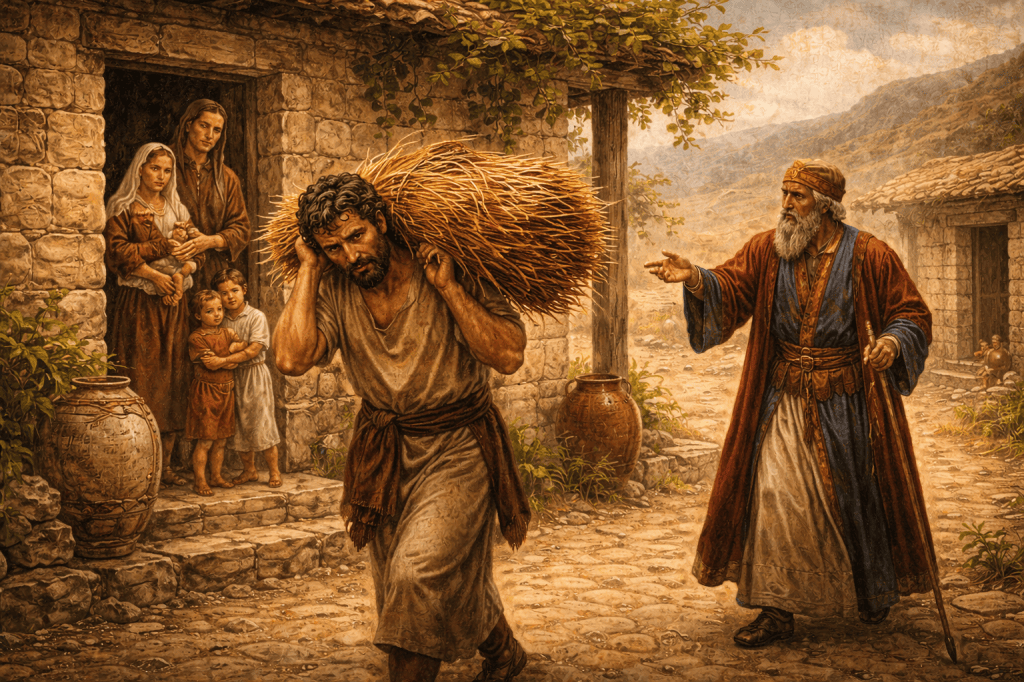
These instructions are not cold legalism. They represent a God-shaped ethic where redemption safeguards human dignity, limits the abuse of power, and builds mercy into the foundations of society.
  🤔 🪞 💡 Exodus 21:1–4 reveals something profound about God’s character: He structures freedom into law. Servitude in Israel was never meant to be perpetual or dehumanizing. Rather, it served as a safety net for those in economic distress, with a built-in timetable for release and restoration. This counters every worldview — ancient and modern — that treats humans as disposable labor or perpetual property.

God refuses to let servitude become exploitation. The rhythm of six years of service and freedom in the seventh reflects Sabbath theology — a divine pattern of work, rest, release, and reset. Marriages are protected. Dignity is preserved. Freedom is always the goal, not just the option.

This passage teaches us that justice and mercy belong together. God’s law does not simply regulate power — it bends it toward dignity, mercy, and eventual freedom.
🎬🔚 End of the story :
For nearly 20 years, Wilberforce stood in the British Parliament tirelessly arguing that every human being — created in God’s image — deserved freedom, dignity, and protection. He joined forces with evangelicals, former slaves like Olaudah Equiano, and a growing public conscience.
Before: The British economy prospered on captured human lives, justified through profit and prejudice.
After: In 1807, after years of persistent advocacy, the British Parliament passed the Abolition of the Slave Trade Act, ending the legal trafficking of slaves throughout the British Empire.
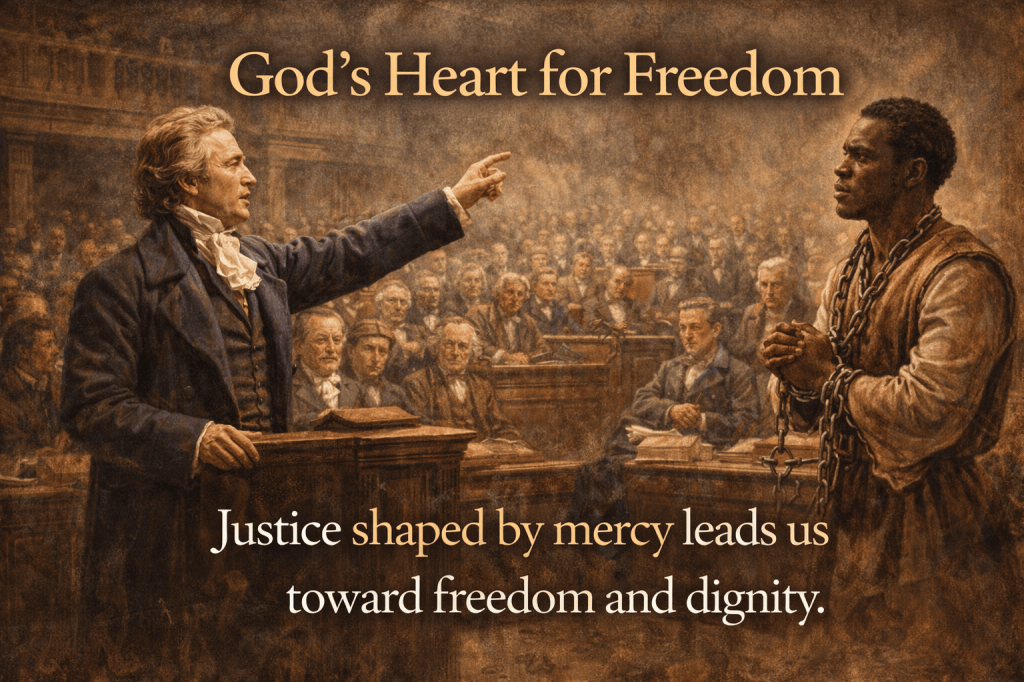
Wilberforce didn’t live to see the abolition of slavery itself (that came in 1833), but his life dramatically illustrated God’s heart for freedom over bondage — a real-world echo of the God-ordered release and dignity found in Exodus 21.
✔ Source: Parliamentary History of the UK — Abolition of the Slave Trade Act 1807
⚒️🎯 We live in a world where people are still trapped by economic pressure, exploitation, and systems that rob dignity. Exodus 21:1–4 calls us to reflect God’s heart in how we treat one another — especially the vulnerable, the poor, and those in precarious circumstances. We must not be people who exploit weakness for advantage; instead, we must advocate for pathways to freedom, protect family integrity, and refuse to profit from systems that trap others indefinitely. God’s heart is always toward restoration, not bondage, and we are called to live mercy-shaped justice in our communities, workplaces, and relationships.
🙏 🕯️ Prayer: Lord, deepen our compassion for the vulnerable. Give us eyes to see systems that trap and hearts that work toward restoration and freedom. May we follow Your way of mercy and justice in all we do. Amen.


Leave a comment