
📖 ✝️ Scripture Reading: Exodus 20:26
“Nor shall you go up by steps to My altar, that your nakedness may not be exposed on it.’”
Exodus 20:26 NKJV
“True worship rises from humility, not from visibility.”
— A.W. Tozer
🎬🔛 John Calvin and the Reformation of Worship in Geneva (1541)
In Geneva, Switzerland, in 1541, public worship had become deeply theatrical. Churches were filled with statues, ornate images, elaborate vestments, and rituals designed to impress the senses. Clergy often stood elevated, visually central, drawing attention to themselves rather than to God.
To be continued…
💒 🕊️ ✨ Israel stands at the foot of Mount Sinai, trembling after hearing the voice of God thunder the Ten Commandments. Fire, cloud, and divine authority surround them. Immediately after declaring who He is and how He is to be worshiped, God gives instructions about the altar—the place where sinful people will meet a holy God.

Among these commands, one stands out: no steps. God knows that steps would elevate the priest, invite attention, and risk exposure of flesh. At the very place where blood would be shed for covering, God refuses to allow anything that would expose human flesh or glorify human presence. The altar is not a platform for display but a sacred meeting point where God covers what humanity cannot.
  🤔 🪞 💡 God’s concern in Exodus 20:26 is not construction design but worship direction. Steps symbolize ascent, visibility, and self-display. Flesh symbolizes human weakness, pride, and self-effort. God decisively removes both from the place of sacrifice. Worship is not meant to elevate us or expose us—it is meant to humble us and cover us.

Jesus later clarifies this eternal principle when He says that God seeks worshipers who worship in spirit and truth (John 4:24). Flesh—whether physical, emotional, or performative—has no place at the altar. What God desires is worship shaped by the Spirit, grounded in truth, and marked by reverence. Whenever worship becomes about how we look, feel, or are perceived, it quietly shifts from Spirit-led devotion to flesh-driven expression.
🎬🔚 End of the story :
When John Calvin returned to Geneva after exile, he led a radical reform—not of belief alone, but of worship posture. Images were removed, elevated spectacles reduced, and worship redirected toward Scripture, prayer, and reverent simplicity. Calvin insisted that worship must guard against anything that places human presence at the center.
Before: Worship emphasized visibility, ornamentation, and sensory display.
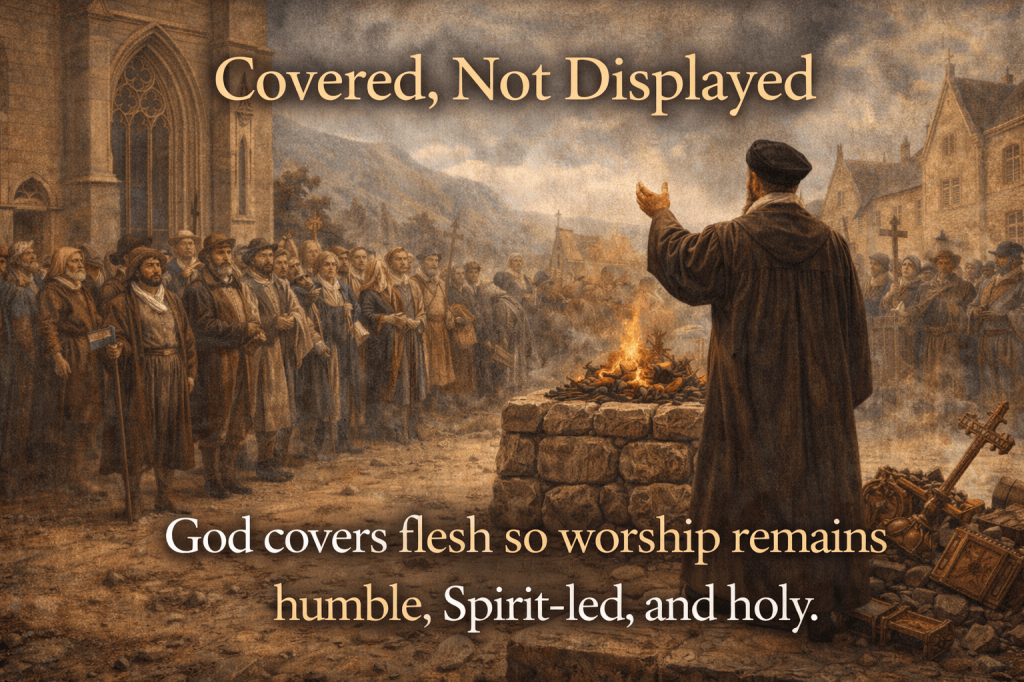
After: Worship emphasized humility, the Word, and God’s holiness.
Calvin’s reforms echoed Exodus 20:26 in principle: worship must cover human glory so divine glory can shine unobstructed.
Source:
Encyclopaedia Britannica – John Calvin and the Reformation in Geneva
https://www.britannica.com/biography/John-Calvin
⚒️🎯 When we come before God, we often carry the temptation to be seen, heard, admired, or affirmed. Exodus 20:26 gently but firmly calls us back to reverent humility. We are invited to worship not by elevating ourselves but by lowering our hearts. God does not want our display; He wants our surrender. As we approach Him covered by grace rather than exposed by self-effort, our worship becomes pure, dignified, and God-centered. When flesh fades and the Spirit leads, God alone receives the glory, and we find true freedom in His presence.
🙏 🕯️ Prayer: Lord God,Teach us to worship You in spirit and in truth.Remove every desire to be seen, praised, or displayed before You.Cover us with Your grace, humble our hearts,and let our worship bring glory to You alone.Amen.


Leave a comment