
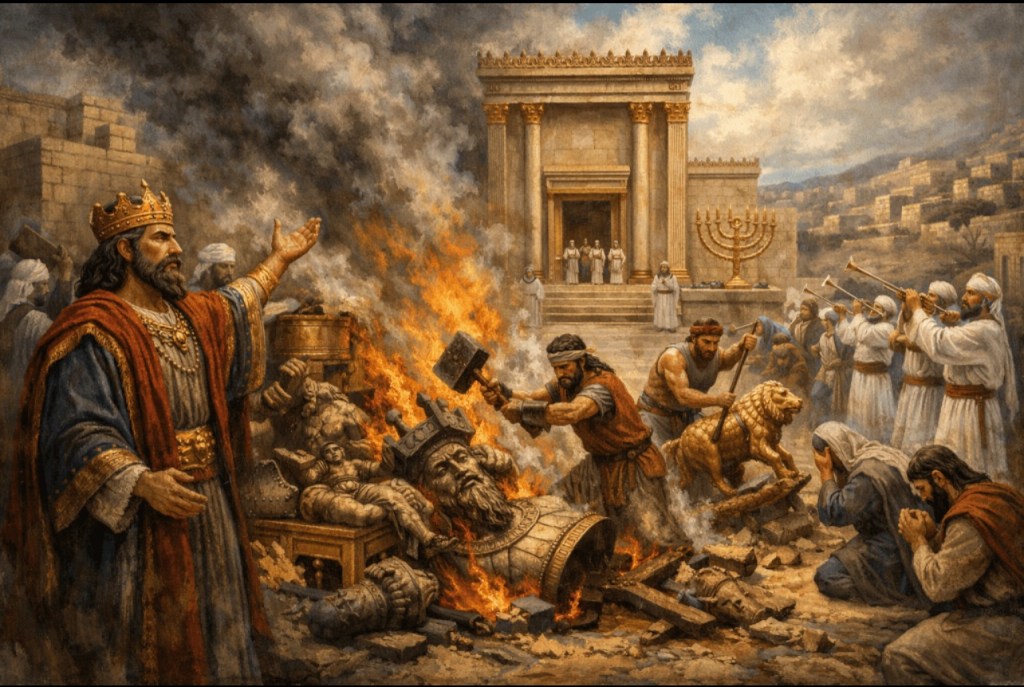
It was the eighth century before Christ, and the kingdom of Judah stood at a spiritual crossroads. A young king had just ascended the throne—Hezekiah, son of Ahaz. He inherited not only a crown, but a nation wounded by compromise.
His father, King Ahaz, had ruled with divided loyalties. Foreign gods had been welcomed into Judah. High places—shrines raised on hills and in valleys—stood openly across the land. Even within Jerusalem, the worship of the LORD had been diluted. The doors of the Temple were shut, the altar neglected, the priests silenced. What was meant to be holy had become polluted. What was meant to be unified worship had become fragmented and unscriptural. The covenant people of God were drifting from their true identity.
Then Hezekiah took the throne.
In the very first year of his reign, Hezekiah acted—not politically, but spiritually. He did not begin with alliances or armies. He began with God.
He commanded that the doors of the house of the LORD be opened again. Light entered a sanctuary long darkened by neglect. The king summoned the priests and Levites, charging them with a solemn task: “Consecrate yourselves now, and sanctify the house of the LORD God of your fathers, and carry out the rubbish from the holy place.” What followed was not symbolic reform, but costly obedience.
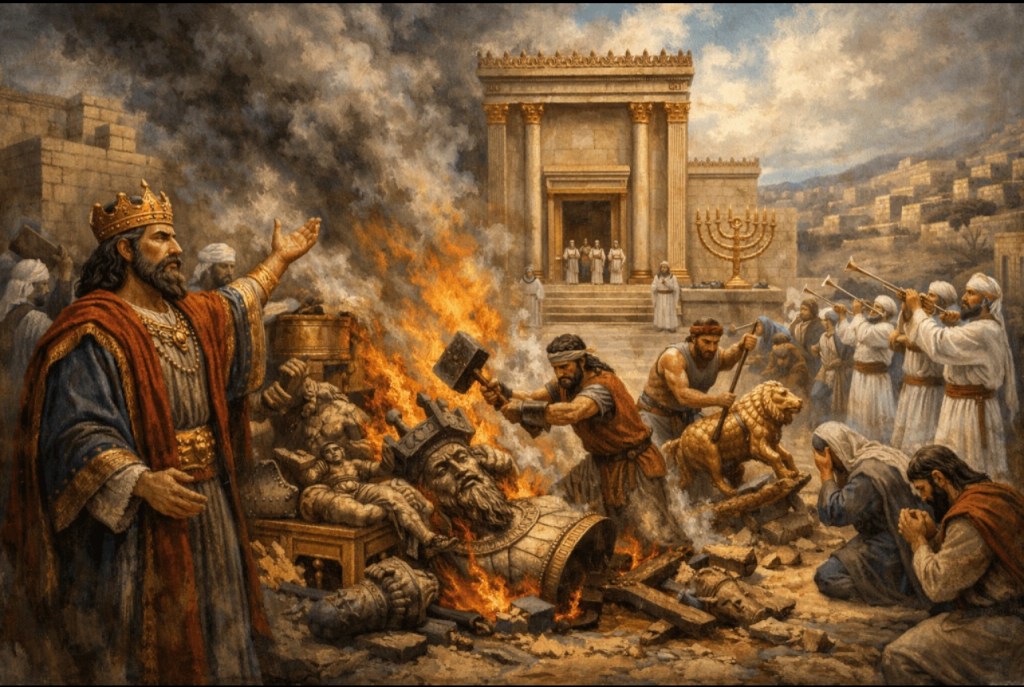
The priests washed, clothed themselves in holiness, and stepped into the defiled courts of the Temple. There they found objects of idolatry, traces of foreign worship, and the marks of years of spiritual abandonment. Everything that did not belong was removed, carried out, and destroyed. Across Judah, idols were torn down, high places dismantled, and false altars shattered. The land itself seemed to breathe again.
For days the work continued—cleansing, repairing, restoring. The Temple vessels were returned to their proper use. Sacrifices were once again offered according to the Law of the LORD. Music and praise filled the courts, not to many gods, but to one God alone. The priests were consecrated. The Levites stood in their appointed places. Order replaced chaos. Holiness replaced compromise.
And something deeper happened.
As the Temple was purified, the hearts of the people were realigned. Worship was no longer divided. The LORD’s exclusive claim on His people was honored once more. What had been broken spiritually was healed through repentance and obedience. The nation did not merely change its practices—it returned to covenant faithfulness.
Before Hezekiah’s reform, worship had been polluted—crowded with idols, shaped by human preference, and fractured from God’s revealed will. After his reform, the house of the LORD stood cleansed, worship restored according to divine standards, and the people renewed in their devotion to the one true God.
Hezekiah’s story is not merely about a king who cleaned a Temple. It is the story of a nation that rediscovered that true renewal always begins by opening what has been closed to God, removing what does not belong, and restoring worship to Him alone.


Leave a comment