
📖 ✝️ Scripture Reading: Exodus 20:15
““You shall not steal.”
Exodus 20:15 NIV
“Integrity is choosing honesty even when dishonesty is easier.”
— C.S. Lewis
🎬🔛 John Newton – From Exploiter to Steward (England, 18th Century)
John Newton (born 1725, London) lived much of his early life exploiting others. As a sailor and later a captain involved in the Atlantic slave trade, Newton profited from human suffering—stealing dignity, freedom, and life itself. Though socially accepted at the time, his actions violated God’s moral law.
In 1748, during a violent storm at sea, Newton cried out to God for mercy. Though his full transformation took years, that moment marked the beginning of repentance. Gradually, Newton abandoned the slave trade, embraced Christian faith, and became an Anglican minister.
To be continued…
💒 🕊️ ✨ When God commanded “You shall not steal,” He established a moral foundation essential for every stable society—the right to personal property. In a world emerging from slavery, where possessions were often seized by power or force, God declared that ownership matters and must be respected.
This command affirms that God Himself entrusts resources, time, abilities, and possessions to individuals. To take what is not given—whether secretly or by manipulation—is to violate both neighbor and Creator. Theft destroys trust, erodes justice, and fractures communities.
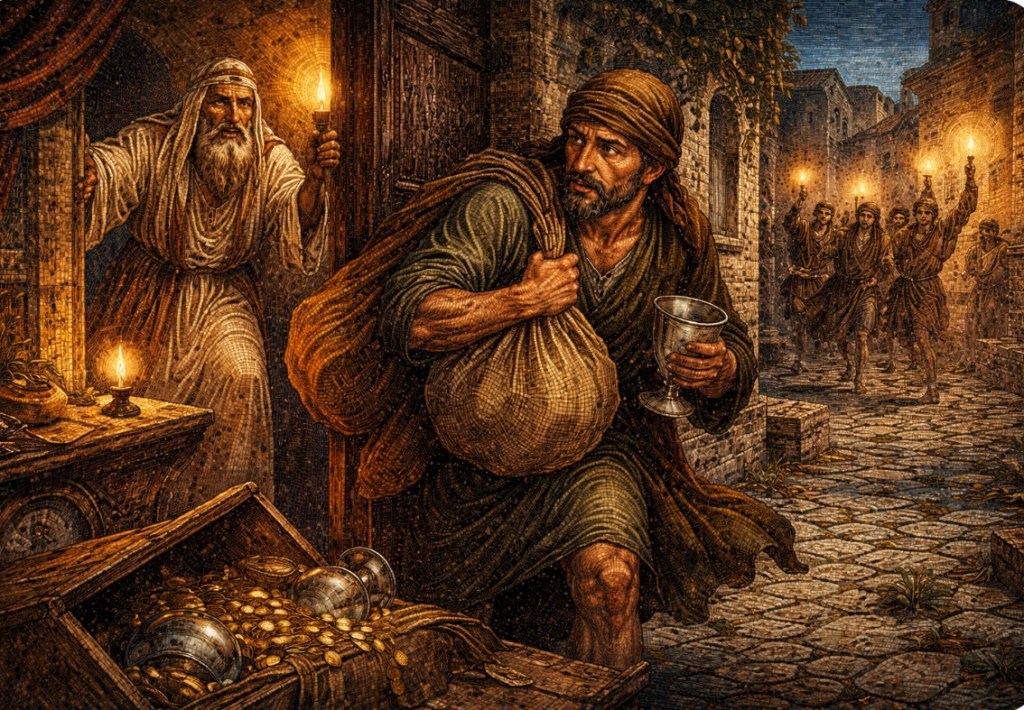
Yet Scripture expands this command beyond material goods. God, through the prophet Malachi, confronts Israel for robbing Him—not only financially, but relationally and spiritually (Malachi 3:8–10). The New Testament echoes this truth: we belong to God because we were purchased at great cost—the blood of Christ (1 Peter 1:18–19; 1 Corinthians 6:20). To withhold obedience, devotion, or service is also a form of theft.
Paul offers the redemptive alternative in Ephesians 4:28: stop stealing, work honestly, and give generously. God’s design moves us from taking → to laboring → to giving.
  🤔 🪞 💡Stealing is not merely a crime of the hands; it is a failure of trust in God’s provision. When we take what is not ours—money, time, credit, opportunities, or even glory—we declare that God is insufficient. This command calls us to live with honesty, diligence, and contentment.

God desires more than restraint; He desires transformation. The redeemed life does not ask, “What can I take?” but “What can I give?” When Christ rules our hearts, we move from selfish gain to generous service. Integrity becomes worship, and honest labor becomes an act of faith.
🎬🔚 End of the story :
In his later years, Newton publicly condemned slavery, supported abolitionist William Wilberforce, and lived a life marked by humility and restitution. He recognized that his former life had stolen from both people and God. His hymn “Amazing Grace” stands as a testimony of redemption—of a man who moved from taking to giving, from exploitation to stewardship.
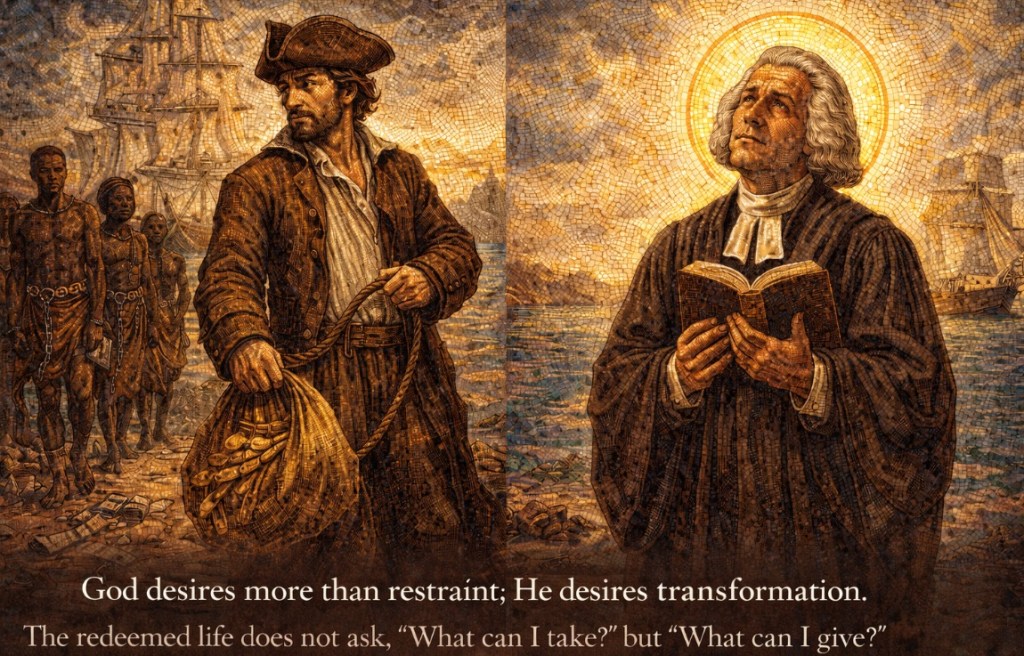
Newton’s life demonstrates that God’s command “You shall not steal” is not only about stopping wrongdoing, but about restoring what sin has broken and living generously before God and others.
Source:
https://en.wikipedia.org/wiki/John_Newton
⚒️🎯 This command challenges us to examine how we handle what God has entrusted to us. We are invited to live honestly in our work, faithful in our finances, and generous in our relationships. We acknowledge that everything we possess—time, talent, and treasure—ultimately belongs to God. As we labor with integrity and give willingly, we reflect a transformed heart that trusts God as Provider and honors Him with obedience and generosity.
🙏 🕯️ Prayer: Faithful God,Forgive us where we have taken what is not ours.Teach us to work honestly, give generously, and trust You fully as our Provider. Shape our lives with integrity and grace. Amen.


Leave a comment