
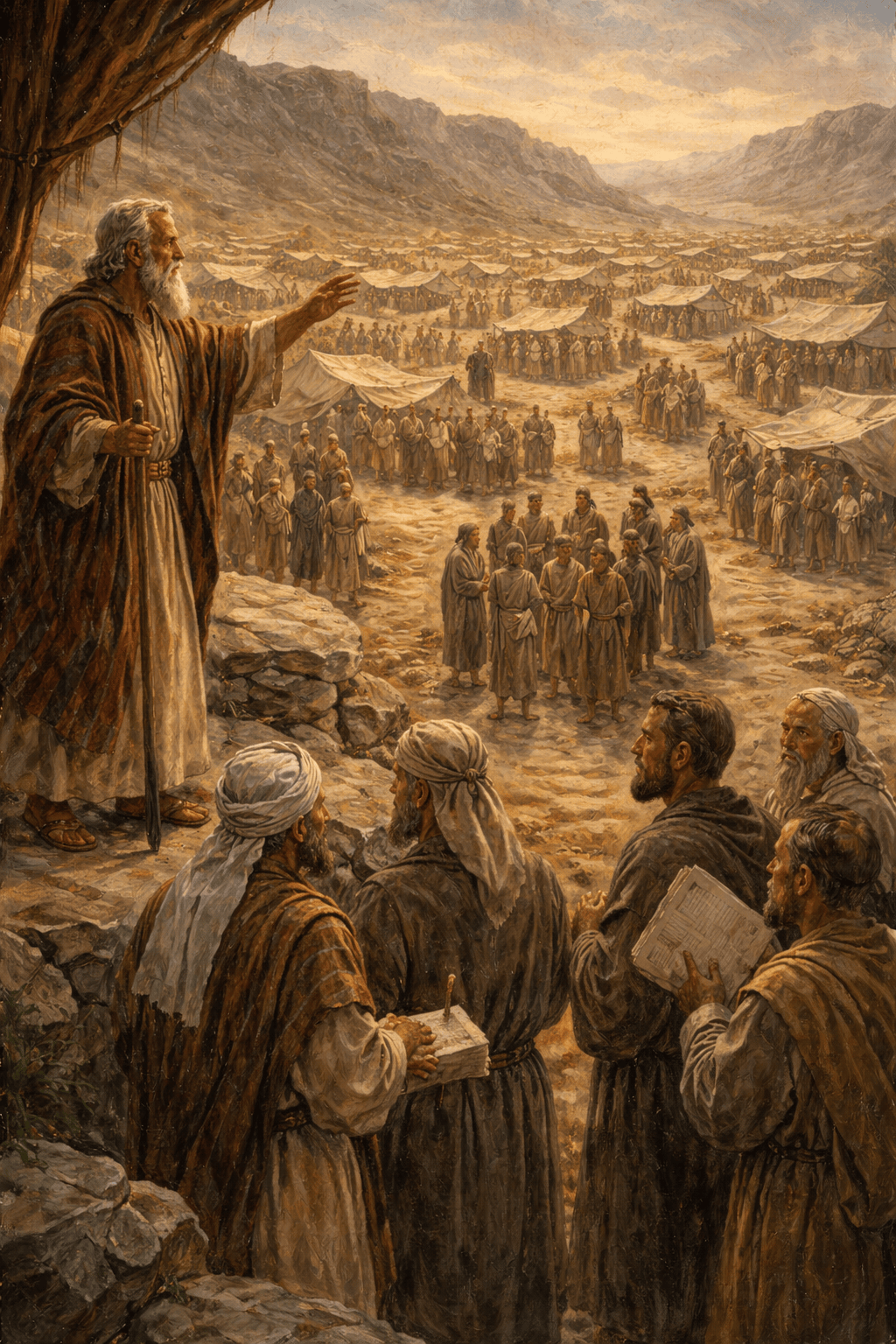
📖 ✝️ Scripture Reading: Exodus 18:21–27
“But select capable men from all the people—men who fear God, trustworthy men who hate dishonest gain—and appoint them as officials over thousands, hundreds, fifties and tens.”
Exodus 18:21 NIV
“God advances His purposes through leaders who value character more than control.”
— Andrew J. Collins
🎬🔛 During the Methodist Revival in England, 1740s, John Wesley faced the challenge of shepherding tens of thousands of believers. Rather than centralizing authority, Wesley organized believers into classes and bands, each led by spiritually mature men and women chosen for character, faithfulness, and integrity.
To be continued…
💒 🕊️ ✨ In Exodus 18:21–27, Jethro’s counsel moves from observation to implementation. Moses is instructed to select from among the people able men—not randomly, but intentionally. Delegation would only succeed if responsibility was placed in the hands of the right kind of leaders.
Jethro outlines clear qualifications:
• Men of ability — capable and competent
• Men of godliness — who fear God
• Men of truth — grounded in God’s Word
• Men of honor — hating covetousness and dishonest gain
This step required Moses to fulfill a crucial leadership responsibility: developing new leaders. He could no longer do all the work himself; instead, he had to discern, train, and trust others.
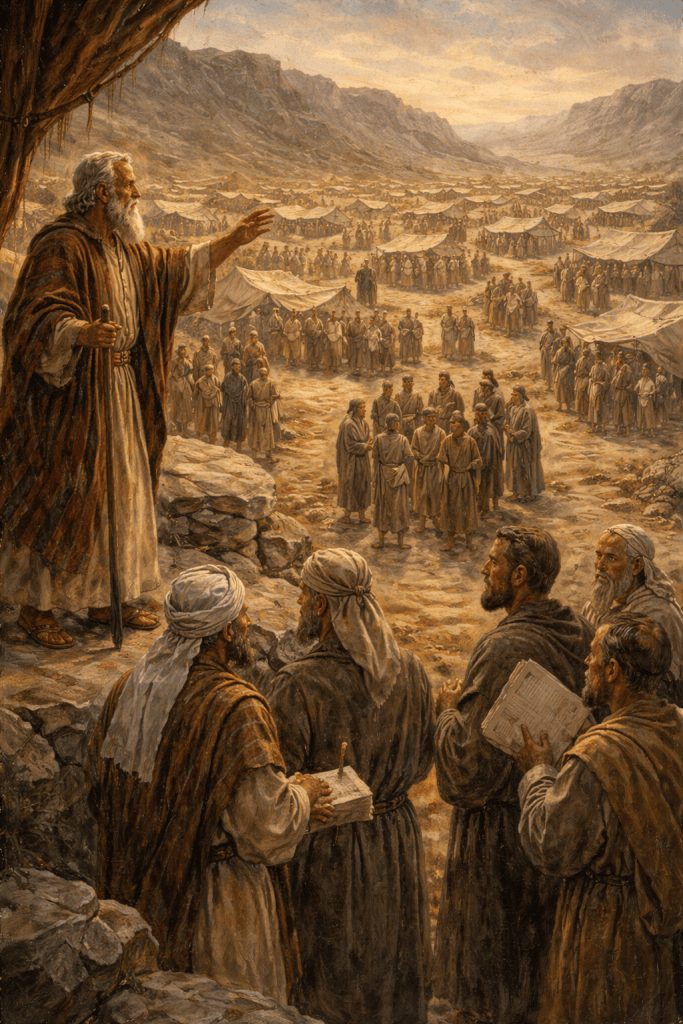
The structure established—rulers over thousands, hundreds, fifties, and tens—ensured oversight without overload. Greater matters came to Moses, while everyday disputes were handled locally. Yet Jethro was careful: this system must be confirmed by God. Human wisdom, even when sound, must be submitted to divine approval.
Moses listened, obeyed, and implemented the counsel fully—demonstrating humility and openness to God’s voice, even when it came from outside Israel.
🤔 🪞 💡 This passage teaches us that delegation is an expression of leadership, not the abandonment of it. Moses retained oversight while empowering others. Effective delegation requires discernment, prayer, and trust. God does not ask leaders to do everything—but He does ask them to choose wisely.

The rewards were immediate and lasting. Moses was able to endure—physically, emotionally, and spiritually. The people, too, benefited. Justice was no longer delayed; disputes were settled quickly, fairly, and closer to home. As Scripture and wisdom agree, unresolved conflict grows more tangled with time. Even Jesus urged reconciliation without delay (Matthew 5:25).

God honored every level of service. Whether ruler of thousands or ruler of tens, each role mattered equally in God’s sight. This system was good for Moses, good for the leaders, and good for the congregation. As D. L. Moody famously said, “It is better to set a hundred men to work than to do the work of a hundred men.”
🎬🔚 End of the story:
Local leaders handled daily pastoral care, accountability, and conflict, while Wesley provided doctrine, oversight, and direction. This system preserved Wesley’s health, empowered ordinary believers, and enabled the movement to spread rapidly across England.
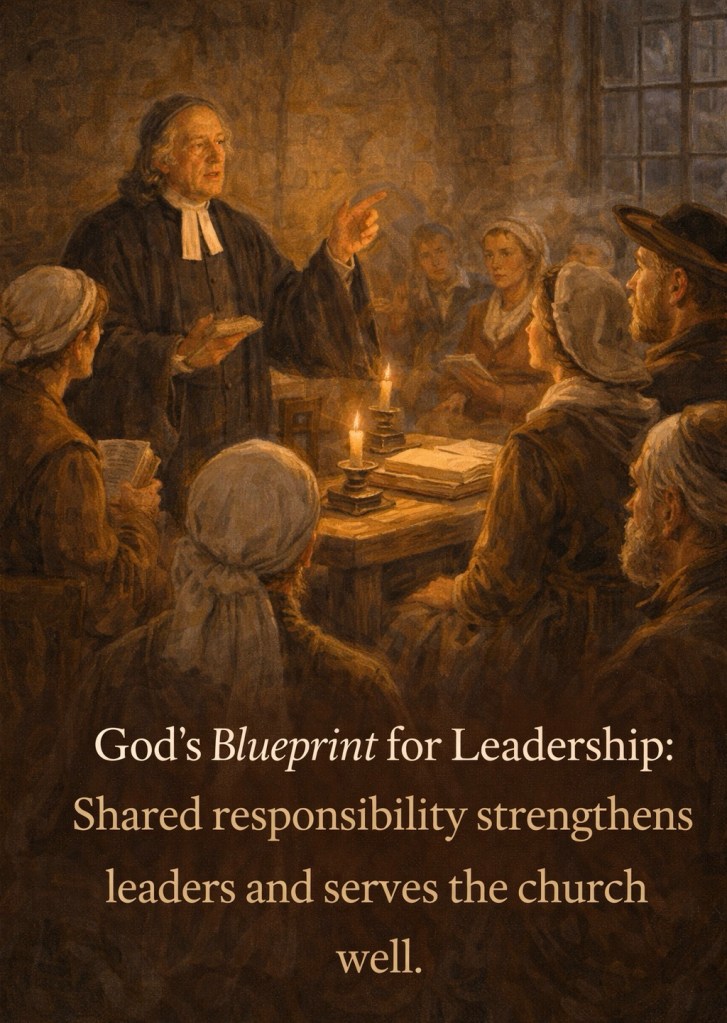
Wesley’s approach mirrored Exodus 18: shared leadership, layered responsibility, and godly character at every level.
Sources:
https://en.wikipedia.org/wiki/John_Wesley
⚒️🎯We learn that God calls us to serve within His order, valuing godly character above position or recognition. As we trust others, develop their gifts, and share responsibility wisely, we experience strength instead of exhaustion and peace instead of frustration. When leadership is grounded in reverence for God and truth, everyone benefits—the leaders endure, the servants grow, and the community flourishes in peace.
🙏 🕯️Prayer: Lord, give us wisdom to choose leaders who fear You, love truth, and serve with integrity. Teach us to share responsibility according to Your will, that we may endure and Your people may live in peace. Amen.


Leave a comment